Category: Industry Leaders

  • It’s time for SA to embrace a new healthcare model

    It’s time for SA to embrace a new healthcare model

    The National Health Insurance (NHI) is not a radical shift to dismantle a functioning system, but an opportunity to review two poorly functioning ones. The public sector sees very high volumes of patients but gives them bad service and produces very poor outcomes. The private sector is modeled on low-volume, high-cost care — it uses its huge quantities of resources badly, to service very few people.

    As the health market inquiry report makes clear, the large, commercial medical schemes are resisting needed reforms which, with better productivity, would lead to the convergence of the two systems. In particular, they persist with an outdated tariff system that pays for services, not outcomes, and doesn’t support team-based delivery models. This is probably because it threatens their claim payment and “managed care” models that justify a very high income. This strategy is counterproductive for their members.

    SA cannot move forward socially or economically without convergence. We need a high functioning universal healthcare system — one that can provide high volumes of quality care at low cost. One that uses all available resources, assigns funding according to need and rewards value (the best outcomes, at the lowest costs) when it is delivered.

    The challenge for all stakeholders is how best to transition to such a system,  one that places patients at the centre of its model, with service by multi-disciplinary teams providing continual and proactive care. The transition must be compelling and safe for clinicians. It must be an attractive vision, have realistic milestones and pose no threat to clinician income. It must produce a system that is affordable for all South Africans.

    No value for money

    This is what the NHI proposes to do: it has as its premise the separation of the supply of healthcare from the role of an agency purchasing it, in line with international best practice. Since 2000, medical schemes have been cast the role of purchaser, but none has taken it beyond pursuing good prices from providers. Instead of actively commissioned, new, highly productive models, they have overseen rapidly rising premiums. The health market inquiry report vividly describes how schemes have failed their members by not buying overall value for money, despite the reform road being perfectly clear.

    The purchaser role put forward by the NHI is the proper one, however, with providers competing for contracts from a large purchaser based on the value they deliver. It sets out to quickly drive vast improvements in how care is delivered to bring down the cost of comprehensive medical care. It plans for a major shift towards community-based care, instead of today’s hospital plans. And it supports widespread multi-disciplinary teamwork, a much more effective and cost-efficient model.

    The NHI is not a move to dismantle the commercial sector, it’s a call to action for much-needed reforms. A commercial sector that offers high-value services will provide them for an NHI purchaser, which has no preference for publicly owned, commercial or not-for-profit providers. Made subject to market competition, public-sector services will need to tremendously improve their delivery of care or face losing their funding.

    We need to acknowledge that, as it currently stands, neither system produces good value, essentially because they are badly structured. They are built around the convenience of clinicians — bringing sick patients to multiple hospitals, clinics or private rooms for care. Doctors are paid and work as individuals, which hinders multi-disciplinary input and results in reactive rather than proactive healthcare. Both systems have poor process management, which cannot manage patients with multiple problems. In different ways, both have badly misaligned incentives for the practitioners who work within them.

    Healthcare stakeholders must get out of the weeds and stop resisting change by disputing unspecified details of the proposed NHI. Stakeholders should be urged to rather embrace the NHI framework as a step in the right direction, one that will spur the sector to action, and out of its current stasis.
  • Automation: Robots are coming to snatch your jobs

    Automation: Robots are coming to snatch your jobs

    Though a 2013 Oxford study mentioned that almost 50 per cent of all US jobs could be computerised within 20 years, 63 per cent of respondents to a Monster.com survey felt nothing could take away their jobs in the next 50 years or so. This shows that too many people are unaware of the automation wave that is coming soon.

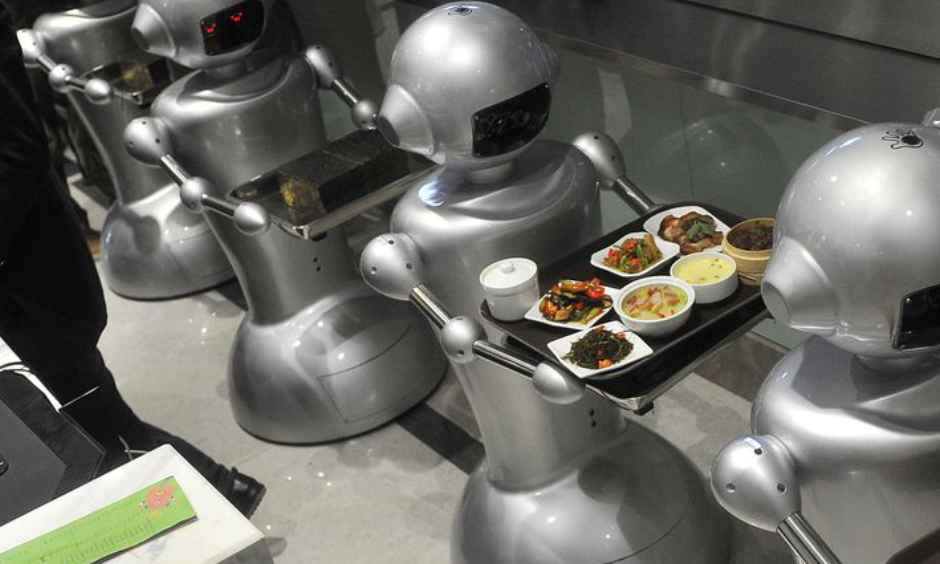
    Food service and manufacturing are predicted to be the first job industries which would be taken over by robots and AI for the most part. If some industries get highly automated, the other fields are bound to get affected too. Employees need to re-skill themselves and fast!

    “Recently, the Indian banking system has seen the beginning of the revolution. Robots also make burgers and do all kinds of middle tasks, leaving behind only entrepreneurship or a temporary staffing. Artificial intelligence manages investments, handles everything like insurance claims and basic bookkeeping, and performs basic HR tasks,” says Avinash Bharwani, Vice President- New Business, Jetking.

    It is your soft skills which will become extremely valuable when AI, automation or robots enter the job market. With the high pace at which new technologies are coming to the fore, we need to ask ourselves whether our work could be done by a robot. And if it can, we need to get worried.

    The main jobs which will face a great automation risk include factory workers, drivers, cashiers, waiters and customer service personnel.

    Which jobs are safe from automation and robots?

    • Creative jobs such as those of artists, designers, hairdressers, writers etc are safe as automation cannot replace true creativity
    • Those jobs where humans display their skills such as that of a sportsperson, singer or dancer will be safe as no one would enjoy robots competing against each other or marvel at a completely artificial voice
    • Jobs requiring empathy such as those of counsellors or therapists will be retained by humans. This category could also include to some extent teachers, vets, dentists, fitness trainers, police officers, fire-fighters etc
    • Jobs where you would need to cater to specific bits of knowledge such as that of tour guides or florists cannot be taken up by robots
    • Jobs which involve creating, maintaining or fixing automation or AI technology would also be safe from robots
    • This shows that while some jobs will be eliminated, many employees will find themselves becoming overseers to AI

    Here are a few tips on how you can protect your job from automation and robots:

    1. Be aware of how much automation risk you face

    Do adequate research in your job field to understand if you should be worried about AI or robots taking over your job. List your skills and check whether any of them could be done by robots. Job skills which deal with people or need you to innovate and come up with new ideas are less likely to be automated. So, focus on enhancing these soft skills to safeguard your job from robots or automation in future.

    1. Understand partial automation

    It is quite possible that only a part of your job, such as inputting data and info onto spreadsheets, will be automated, which can actually boost your productivity. Often, employees spend a large chunk of their allotted work hours doing menial, routine jobs which do not utilise the human mind adequately. These routine jobs will be dealt with by using automation software, AI and robots. You need to make sure that your top job skills are polished and possess a human touch.

    1. Work beyond your job description

    To make yourself more valuable to your company, have a decent idea on how the rest of the departments work. Understand the goals of the company and increase your area of expertise so that if your job in under the threat of being taken over by automation, AI or robots, you have other options to bank on.

    1. Look for a career move

    If per chance you realise that your job will definitely be taken over by robots or automation and there is nothing you can do to change that, start looking for a different job which uses slightly different job skills that cannot be automated. Re-skill yourself accordingly – you can go for short certificate courses or sign up for a free course on Coursera, EdX or yet another MOOC website. Some companies also provide tuition reimbursement to employees looking to skill themselves further.

    The automation wave would definitely help push forward human productivity to a great extent and the increasing proliferation of AI and robots is actually a great boon. “Artificial Intelligence is making technology more helpful and intuitive. And this is most evident in the smart-phone market. A phone that can learn your language, count your calories, answer your questions or recognize what a things look like,” says Jetking’s Bharwani.

    India and automation

    India too needs to join the rest of the world in pushing its way forward in the field of artificial intelligence. “China has progressed in AI-based research; India should also view

    AI as a critical element of national security strategy. India needs to be prepared for the digitalised future. Establishing AI-ready infrastructure, digital services and digital literacy is thus necessary to prepare India’s jobs and skills markets for an AI-based future. The bold urban initiative by government called ‘Smart Cities’ is also giving a hint to the public to stay ready,” says Bharwani.

    The skills, experience and insight that a human being can provide are irreplaceable. Soft skills are the skills of the future. Machines and robots would only be taking over those jobs which are suitable for them.

    As Bharwani says, “I believe the time is not far when the robots takeover workplaces and hence it is necessary to know how humans are required to handle them. AI is no more a toddler. Many AI researchers believe that the day will ultimately come. The question is, are humans ready for it?”

  • Why B-School is initiating teaching Artificial Intelligence and Machine Learning

    Why B-School is initiating teaching Artificial Intelligence and Machine Learning

    There is no doubt that Artificial Intelligence (AI) and Machine Learning (ML) are the two hot buzzwords right now. Examples of how AI and ML based disruptive practices are replacing traditional businesses on one hand while creating new business opportunities, on the other hand, are many.

    In a nutshell, AI is the broader concept of machines being able to carry out tasks in a ‘smart’ way while ML prescribes the set of such ‘smart’ rules that the computer figures itself out.

    2 lakh new jobs coming up in Artificial Intelligence sector

    It is no exaggeration to say the current and the future belongs to AI and ML. It is estimated that in USA, there are more than 10,000 positions available at top employers across the country and additionally, the country is estimated to have 2, 50,000 open data science jobs by 2024.

    Elsewhere — in EU, Canada and China — the demand for AI related jobs are not only in high demand, they are a few notches above the median salary.

    India too is not far behind other countries in terms of AI hiring. Some estimates expect a 60 per cent rise by this year due to increasing adoption of automation, and the related IT industry will require 50 per cent more workforces equipped with digital skills.

    All this translates to around 2 lakh new jobs this year.

    Educational institutes need to provide future AI employees

    Obviously, where the demand is there, educational institutes are expected to be at the forefront in bridging the gap. The question is — why are AI and ML finding its way into the B-school curriculum when it appears that AI and ML are still the forte of computer scientists, programmers and mathematicians?

    Almost all of the top 20 business schools in India are now offering specialisations in Business Analytics while some of them are offering specialisation tracks in AI ML.

    The answer is evident if we closely inspect two things:

    • One – what does AI ML typically do or can do?
    • Two — what are the expected roles of business schools?

    Decision-making based on data inputs isn’t anything new: Benefits of AI and ML

    To understand what AI and ML bring, we must acknowledge that decision-making based on data inputs isn’t new. Indeed, the traditional courses offered in B-schools related to decision sciences used computational algorithms as well as statistical models to solve problems.

    Most of these algorithms are over a century old. However, our getting to a solution was limited by the way we deemed fit to go about it.

    For example, logistic regressions, the favourite technique for many to solve binary classification problems (problems that needed us to correctly predict one group from the other), required us not only to identify the factors but also how they must be related to each other.

    Undiscovered and hidden patterns in the data eluded us. ML solved this by letting the algorithms learn on its own, from the data and from itself the best route to classify.

    Thus, the various boosting models, ensemble techniques as well as neural network models connected dots in the data which improved upon the results traditional algorithms could not.

    The second finesse AI and ML brought are the unstructured data. This is what defines them and has not only gives us additional insights, it helps us address and tackle issues which otherwise we struggled with.

    We now solve traditional problems using data obtained from video cameras, speeches, texts, social media interactions, images, satellite images etc. We no longer need to only focus on historical data to gauge stock market sentiments, often analysing texts in shareholder reports gives us better accuracy.

    To estimate the footfalls in shopping malls, traditional survey methods are getting replaced by images of cars in car parks, to design agricultural forward contracts, satellite images of agricultural plots provide invaluable information.

    Simply put, AI and ML have allowed us to access, process and utilize data in an efficient way to solve complex problems – both traditional as well as those posed in the new ecosystem. This is where B-schools fit in, almost by design.

    B-school curriculums have always pride themselves for creating efficient decision makers. Managers are expected to decide and then execute their decisions. Often, such decisions must be made based on limited data and experience and yet must be made quickly.

    It is not surprising, therefore, that some of those decisions face ex-post criticism, and perhaps rightly so. Decisions based on AI-ML are likely to reduce such errors.

    For one, most of the unstructured data are not open to manipulations, and two, analysis based on that data reduces the human bias largely.

    What is missing with AI and ML: the power of human intuition

    However, there is an intrinsic part of human decision making that can’t be separated — intuition.

    To a machine, a data is a set of numbers arranged in rows and columns where the column headings have no meaning! To a manager, the column headings are the most important. It is his training and experience that allows him to retain what is essential and cull out the rest.

    Unlike a data scientist, whose journey with ML techniques is almost entirely about the column headings, he can trade-off accuracy for insight.

    For example, an ML technique may always pick up ethnicity of an individual to determine whether he is worthy of receiving a loan, but a manager can use insights to exclude ethnicity as it may violate some fundamental principles!

    A successful AI ML programme in B-schools must ensure that this balance stays. Curriculums must focus on ML techniques complimenting the managerial decision and not substitute them.

    While Indian business schools were reasonably slow in riding the business analytics wave, it appears they want to remain ahead of the AI ML curve this time.

  • WHAT TO DO WITH YOUR IMAGINATION

    WHAT TO DO WITH YOUR IMAGINATION

    We all have imagination capabilities, it depends whether we choose it to imagine or not. You are always free to imagine without any interruptions. As it is a mingle-mind process, you can simply close your eyelids and imagine anything, that’s it. That’s how we can realize Imagination Power, which is perhaps supernatural as it completely exists in a dream world, not in reality. Imagination can be said as a natural breathing for us.

    It has been scientifically proven that the boundaries of imagination are just our past memories and experiences.  Creativeness which grows out of our mind is the result of imagination and can be termed as our ability to mix a number of existing principles or concepts put them in arranged order to look at something new or different from the world.

    That famous Apple motto of the late 1990s harks true: think differently.

    Thinking differently is not only restricted to highly sharp or quick-witted capable geniuses. Imagination helps in improving knowledge which is then applicable in solving problems and is fundamental to integrating experience and the learning process. You can imagine wherever you want; it can be a workplace, a playground, while bathing, etc.

  • SMALL CHANGES HAVE REALLY PROFOUND IMPACT

    SMALL CHANGES HAVE REALLY PROFOUND IMPACT

    Sometimes in our life small and almost less changes can have major impact. Right starting from thinking about a problem to a point of observing someone, delicacies play a very crucial role.

    The reason being celebrating the bigger  changes— invention of a plane or the moving to vehicles from old-age wagons , over the smaller ones—wearing a fashionable shirt, taking up new attires or goggles or making a new  cartoon character out of our creativity —is because little or changes at lower level  are pretty much at ease.

    You don’t have to put in much to incorporate little changes. Even then, we usually tend to ignore making these little changes by giving indefinite reasons like if it is easy to do, it’s not that much important.

    Yes! Many of us can easily see, this is not the case. Taking creativeness into consideration one should not need to focus on larger or big changes or challenging problems in life; but foresee that what little changes you can make now onwards, then make them. Considering them not easy, but focusing on what changes it has made to a situation irrespective of its previous condition.

    Image URL: https://unsplash.com/photos/Ra_XAMExk8c

  • SHARING IDEAS ARE MAKING MORE SENSE THAN SHELTERING

    SHARING IDEAS ARE MAKING MORE SENSE THAN SHELTERING

    We usually hide our ideas out of fear as they can be apart before they’ve had a chance to shine. We always keep our ideas in a perfectly polished condition before we start sharing them with the world, before keeping things in the way which could bring the revolution to a greater extent. We always fear condemnation and perhaps think that our mind-blowing ideas aren’t that much great to be applied for.

    If we thought our ideas step out of our capabilities, desires, quotient; then we should always keep in mind that it would be always the scariest or worst thing to be revealed in front of others. From others, at last, we expect that we’re not that much intelligent or capable enough to handle or we tried to prove something as superlative which is obvious for many of us. As we don’t want to showcase ourselves as fool or wrong, we cover our ideas from the world until we get a good stage to put forward it.

    We should understand that ideas can never be great enough unless and until they face denunciation from outside world or fall under this human world point of view. As far as an idea is in our mind, it is termed as good or mind-blowing. Once an idea is revealed in the world then it can be grown or strengthened to a maximum extent so as to bring best out of it.

    Image URL:  https://unsplash.com/photos/C-v1p2DTakA

  • Exercise can help cut depression, schizophrenia symptoms

    Exercise can help cut depression, schizophrenia symptoms

    London, Oct 2 (PTI) Exercising two or three times a week can reduce symptoms of depression and schizophrenia, according to experts who suggest that a structured physical activity regime can complement standard medication and psychotherapy to better treat mental health conditions.

    Based on compelling evidence from a meta-review of existing research, the European Psychiatric Association (EPA) has issued new guidelines to promote exercise as a key additional treat for mental health conditions.

    A global team of scientists collaborated on the new EPA guidelines published in European Psychiatry, which suggest a regime of structured exercise should be added to standard medication and psychotherapy.

    Researchers found that exercise can effectively reduce mental health symptoms, improve cognition, and strengthen cardiovascular fitness among patients with depression and schizophrenia.

    Their analysis demonstrates that moderate intensity aerobic exercise, two to three times a week for at least 150 minutes, reduces symptoms of depression and schizophrenia and improves cognition and cardiorespiratory health in schizophrenia spectrum disorders.

    Evidence also supports combining aerobic with resistance exercise to improve outcomes for individuals with schizophrenia spectrum disorders and major depression.

    The EPA guidance was also endorsed by the International Organization of Physical Therapists in Mental Health (IOPTMH).

    “Our comprehensive review provides clear evidence that physical activity has a central role in reducing the burden of mental health symptoms in people with depression and schizophrenia. Our guidelines provide direction for future clinical practice,” said Brendon Stubbs, from King’s College London in the UK.

    “Specifically, we provide convincing evidence that it is now time for professionally-delivered physical activity interventions to move from the fringes of healthcare and become a core component in the treatment of mental health conditions,” said Stubbs.

    Long-term outcomes and full recovery among people with mental illness are often poor, even for those receiving appropriate medications. People with mental illness also experience very poor physical health and drastic physical health inequalities, which lead to this population dying up to twenty years prematurely.

    “Signs and symptoms of premature cardiovascular diseases can be identified early in the disease course of mental disorders, when patients are in their thirties to forties,” said Kai G Kahl from Hannover Medical School in Germany.

    The study provides evidence that physical activity plays an important role in reducing cardiovascular symptoms and improving physical health and fitness.

  • DON’T STEP BACK, SHARE YOUR IDEAS

    DON’T STEP BACK, SHARE YOUR IDEAS

    When we want to realize that our ideas are just a replica of just their own objects not looking them as a result of our intelligent mind, we take a step back in the past and at that moment we share those unique creations with the world. By showing them to the world, our ideas gets fuelled by criticism and undergoes hammering or shattering process, resulting into some ideal proposition or design that is bound to receive appreciations.

    In fact our ideas or plans are everlasting and cannot be shaken by any supernatural forces present in nature. Ever you had any good idea, it will be remain in the mind forever. It will going to stay with you forever stored somewhere in a human complex designed natural machine called brain.

    Ideas are just thought of brain and are immortal. Remember last time you thought about giving vote to any political party due to their good deeds for the common masses in last 5 years or murmuring the lyrics of the last song you heard on FM radio or while riding in bus, it’s just an another example of idea. It’s very difficult for your mind to get off the topic once an idea stricken in it. Whenever we let our design or plans to flow in which they want, then  evolution path is build up which takes our thinking to a next level resulting into great things ever happened in the history of mankind.

    Image Link: https://unsplash.com/photos/Tdlr4irVuvM

  • CREATIVITY IS SHAPING THE LITTLE CHANGE

    CREATIVITY IS SHAPING THE LITTLE CHANGE

    Creativity can be thought as thinking about big ideas or plans. In our materialistic world, big ideas are easily recognized and celebrated; while small ideas are not even noticed, dumped somewhere inside journals or in write-ups.

    Creativity starts from making little changes which can be easily retrieved and tried so as to build in confidence. At the same time, little or no changes gives birth to big-brain ideas or big-ideas can be a mirror of those thousands of small chunks of ideas shaping a series of concepts or having a big insights.

    These little ideas are overlooked by many of us and we keep them aside without giving them a first try too. As we see in our day-to-day routines, we just struck a new or innovative thing to create out of our curiosity and at end of the day we just realize it as unworthy and hardly rejoice over it. In fact, it has been observed that small or little changes have less impact to our lives; just because our mind has been brought up in that way.

    I am fond of writing and I feel that my small opinion can hit the brain cells and evolve any new idea which can bring revolution and can have drastic effect on our society we live in. Sometimes, my words can give spark to any hidden gem-o-side designs inside any of our kids and they may revolutionize in any direction which is not ever thought of and can solve trivial problems of human’s life.

    Image Link: https://unsplash.com/photos/YtzpWzIgadQ

  • BY IMPROVING YOUR IMAGINATIVE CAPABILITIES YOU IMPROVE YOUR ABILITY TO THINK CREATIVELY

    BY IMPROVING YOUR IMAGINATIVE CAPABILITIES YOU IMPROVE YOUR ABILITY TO THINK CREATIVELY

    Steve Jobs might have thought first time what personal computer would look like or even existed. Michelangelo would have imagined many statues before he started any sculpting work, like clay stammering or hammering marbles. As a result of deep-thinking and their super skill sets, a new or innovative invention came out as the large-sized computers of the 1980s or Ancient times Statues.

    To put a fire to your imagination you must try by experiencing new ventures, then identification of patterns or artifacts models for modifying which you can imagine. But as we are so accustomed to the things, we fail to look at things in other ways.

    Always we do not come across imagination, sometimes we have to ask questions by taking one step backward. Cognitive conflict can be an alternative: give some silly or mad reasons to imagine. Taking a handful of experiences, raw data facts we can increase our thinking capability by examining critically or playfully, we can empower and give a hike to our imaginations.